

Corn Fertilization Program: A Strategic Nutrition Guide from Soil to Harvest for Record Yields
Corn has strategic importance worldwide, and realizing the high yield potential of this plant requires the right approach. Corn Fertilization Program It plays a vital role. Corn is one of the plants that produces the most biomass per unit area. This high production capacity means it extracts a very large amount of nutrients from the soil. Farmers must understand the developmental stages of corn and its specific needs at each stage. Every gram of fertilizer applied during the process from soil preparation to ear filling directly affects yield and quality parameters.
Modern agricultural techniques no longer simply aim to apply fertilizer, but to provide the plant with what it needs, when it needs it. In this guide, we will delve into the macro and micronutrients that corn needs throughout its life cycle, their application times, and yield-boosting tips. Adopting a scientifically based approach, we will cover all the details necessary for sustainable and profitable corn production.
Soil Analysis: The Cornerstone of Fertilization Strategy
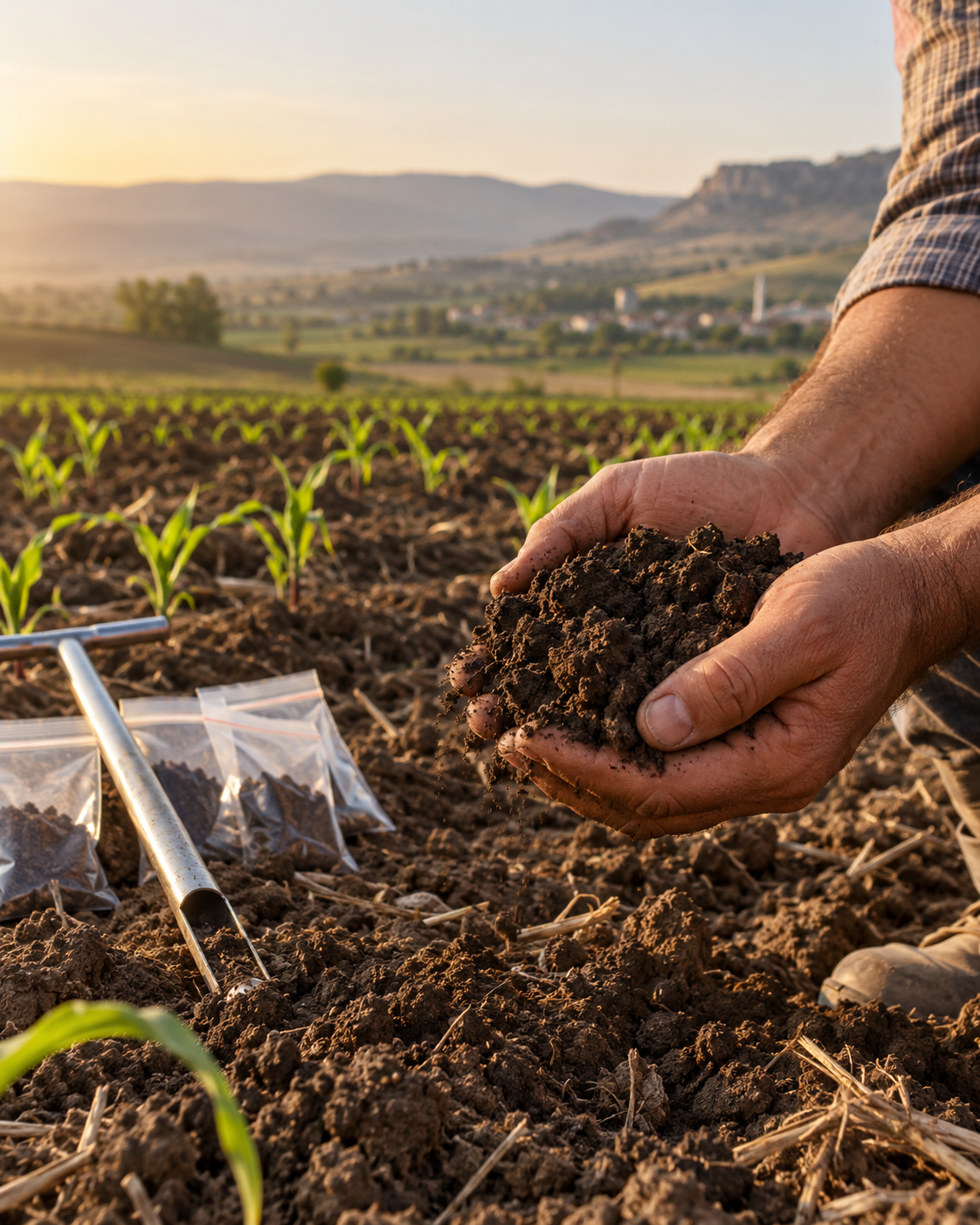
The first thing to do before starting any fertilization program is... soil analysis The key is to have a soil analysis done. Fertilizing without a soil analysis is like shooting arrows in the dark. The analysis results reveal your soil's existing nutrient reserves, pH level, lime content, and organic matter content. A fertilizer solution is prepared based on this data. Corn Fertilization Program, This both optimizes costs and prevents environmental pollution.
Soil pH level directly affects the availability of nutrients to plants. The ideal pH range for corn is between 6.0 and 7.0. If the soil is too acidic or too alkaline, the fertilizers you apply will bind to the soil and the plant will not be able to utilize them. In such cases, soil improvement should be carried out with liming or sulfur applications before fertilization. The soil analysis report is the most reliable roadmap for determining how much of each element the plant needs during its growth process.
The Importance of Organic Matter and Soil Structure
The physical structure of the soil is a hidden factor determining the effectiveness of fertilizers. Soils rich in organic matter have high water retention capacity and good aeration. This is critically important for plants with deep root systems, such as corn. Organic and chemical fertilizers Establishing a balance between these elements protects the long-term fertility of the soil. To increase the amount of organic matter, manure, green manuring, or humic-fulvic acid applications can be preferred. These applications increase the cation exchange capacity of the soil, preventing the leaching of nutrients.
Corn's Macronutrient Requirements: Nitrogen, Phosphorus, and Potassium
Corn consumes large amounts of Nitrogen (N), Phosphorus (P), and Potassium (K) throughout its life cycle. These three elements form the essential building blocks of the plant, and a deficiency in any of them leads to different developmental disorders.
Nitrogen Management and Growth Rate
Nitrogen is the engine of corn. It is essential for the formation of the plant's foliage, photosynthesis capacity, and protein synthesis. However, the high mobility of nitrogen in the soil makes its management difficult. Corn needs the most nitrogen between the V6 (6-leaf stage) and the tasseling stage. Therefore, nitrogen should be applied in installments rather than all at once. In addition to the nitrogen applied in base fertilization, top dressing, which is done when the plant reaches 40-50 cm in height, is the main factor determining yield. Fertilizers in the form of urea or ammonium nitrate should be selected according to the soil and climate conditions.
Contribution of Phosphorus to the Root and Energy System
Phosphorus is essential for energy transfer (ATP) within the plant and for root development. Phosphorus deficiency during the early stages of corn development causes stunted growth and purple leaves. Because phosphorus moves very little in the soil, applying it near the seed (in a band) at planting is the most effective method. For a strong start... plant root development Phosphorus is irreplaceable in these strategies. A well-developed root system increases the plant's resistance to drought and stress.
Potassium-Water Balance and Resistance
Potassium regulates water balance in corn and controls the opening and closing of stomata. It also increases stem strength, preventing the plant from lodging. In corn with potassium deficiency, burns appear on the leaf edges and the ear tips remain empty. Corn absorbs most of its potassium during the vegetative growth period. According to soil analysis results, all the required potassium should be added to the soil before or during planting.
The Critical Role of Microelements in Maize Yield
Although not used in as large quantities as macroelements, microelements play a key role in the biochemical processes of maize. Zinc, in particular, is the microelement most frequently deficient in maize and the one that most restricts yield.
Zinc: Corn's Favorite Element
Corn is extremely sensitive to zinc deficiency. Zinc is essential for the synthesis of growth hormones (auxins) in the plant. In zinc-deficient corn, internodes shorten and white-yellow stripes form between the veins of the leaves. This directly affects ear size and kernel count. Zinc application can be done through the soil before planting, or foliar application can yield rapid results.
Boron and Pollination Success
Boron is critical for pollen health and pollination in corn. Boron deficiency during the flowering period leads to reduced kernel set in the ears and empty ears. Since boron is an element with low mobility within the plant, foliar applications before tasseling support this process. However, because excess boron can have toxic effects, dosage adjustment must be done very carefully.
Timing and Application Methods of Fertilization in Maize
Using the right fertilizer at the wrong time is a waste of both labor and money. The nutrient uptake curve of corn varies greatly depending on its growth stage. An effective... agricultural fertilizers The following steps should be followed for its management:
- Pre-October Fertilization (Base Fertilization): All of the phosphorus, all of the potassium, and some of the nitrogen are mixed into the soil at this stage. Compound fertilizers (15-15-15, 20-20-0, etc.) are frequently preferred.
- Starter Fertilization in Planting: Applying low doses of nitrogen and phosphorus 5 cm to the side and 5 cm below the seed promotes rapid seedling emergence.
- V4-V6 Period (First Top Fertilization): A significant portion of the nitrogen is applied during this period. The plant now begins to grow rapidly and its nutrient intake increases.
- V10-V12 Period (Second Top Fertilization): Nitrogen application continues along with irrigation. This period is a critical stage in the formation of the ear of corn.
- Pre-Basel Applications (Fominal Applications): Supplemental products such as microelements and seaweed are applied to increase the plant's stress tolerance.
Foliar Fertilization: Emergency and Support Mechanism
Foliar fertilizers come into play when nutrient uptake from the soil is restricted (excessive moisture, drought, low temperatures). Foliar fertilizers can meet the plant's nutrient needs in seconds. However, the main nutrient source for corn is always the soil. Foliar applications are an excellent aid, especially for the rapid transfer of elements such as zinc, boron, and magnesium. They also strengthen the plant's immune system, making it more resistant to environmental stressors.
Synergy Between Irrigation and Fertilization
Fertilization and irrigation are inseparable in corn production. Water is the vehicle that allows nutrients to dissolve in the soil and be transported by the roots. In the case of insufficient irrigation, even if there is sufficient fertilizer in the soil, the plant cannot access it. In modern corn production... drip irrigation These systems maximize fertilization success. Fertigation (sulama ile gübreleme) yöntemi sayesinde, bitkiye her sulamada ihtiyacı kadar besin verilebilir. Bu yöntem azot yıkanmasını minimize eder ve gübre kullanım etkinliğini %30-40 oranında artırır.
Common Mistakes in Corn Fertilization
Many growers believe that more fertilizer will lead to higher yields. However, over-fertilization damages the soil and disrupts the plant's balance. For example, excessive nitrogen application can make corn more susceptible to aphids and diseases. It also over-stimulates stem development, increasing the risk of lodging.
Another common mistake is ignoring the need for sulfur. Plants require a certain amount of sulfur to efficiently utilize nitrogen. In soils deficient in sulfur, the desired results from nitrogen fertilization cannot be obtained. Therefore, it is important to include sulfur-containing fertilizers such as ammonium sulfate in the fertilization program.
Sustainable Agriculture and Fernabio Solutions
The agriculture of the future requires achieving yields without exhausting the soil. Fernabio We stand by corn producers at every stage. Our technologically advanced fertilizers and plant nutrition products aim to maximize the genetic potential of corn. We offer a wide range of products, from organic solutions that improve soil structure to foliar fertilizers that aid the plant during its most challenging moments. Our goal is to protect not only today's yield but also tomorrow's soil health. To make a difference in your corn fields with the right timing and product selection, you can always contact our professional support team.
Frequently Asked Questions
When and how should base fertilizer be applied to corn?
In maize, base fertilization should be done immediately before or during planting. The ideal application method is to apply the fertilizer in a band 5 cm to the side and below the seed. This method allows the roots of young seedlings to easily access the nutrients while preventing the seed from burning due to direct contact with the fertilizer. Compound fertilizers, generally rich in phosphorus and potassium, are preferred as base fertilizers because these elements move slowly in the soil and the plant needs these reserves throughout the season.
Why do nitrogen fertilizers need to be applied in several stages in corn cultivation?
Nitrogen is a highly mobile element in the soil and can easily be leached away from the root zone by irrigation or rainfall. While corn requires a small amount of nitrogen in its early stages of development, this need increases exponentially during its rapid growth period (after V6). Applying all the nitrogen at planting causes it to be lost before the plant can utilize it. Therefore, applying nitrogen in smaller portions during the growth phases where the plant needs it most is the most appropriate approach in terms of yield and fertilizer economy.
How does zinc deficiency affect corn yield and how can it be corrected?
Çinko, mısırda koçan oluşumu ve dane dolumu için kritik bir mikro elementtir. Eksikliği durumunda bitki boyu kısalır, yapraklarda karakteristik beyaz şeritler oluşur ve en önemlisi koçanlar tam dolmaz, bu da doğrudan %20 ile %40 arasında verim kaybına yol açabilir. Çinko eksikliğini gidermek için ekim öncesinde toprağa çinko sülfat içerikli gübreler karıştırılabilir. Gelişim döneminde eksiklik gözlendiğinde ise, yapraktan uygulanan şelatlı çinko gübreleri bitki tarafından hızla emilerek sorunu kısa sürede çözer.
When is foliar fertilization most effective in corn?
Foliar fertilization is most effective when corn is under stress or when nutrient uptake from the soil is slow. The 4-8 leaf stage and the pre-tasseling period are particularly productive times for foliar applications. Products containing microelements, amino acids, and seaweed extract applied during these periods increase the plant's photosynthesis rate and promote stronger ear formation. Application should be done in the early morning or cool evening when evaporation is minimal.
What is the effect of soil pH level on corn fertilization?
Soil pH is a fundamental factor determining the chemical form of nutrients and, consequently, their availability to the plant. When pH levels fall outside the ideal range of 6.0-7.0 for corn, phosphorus and microelements, in particular, become tightly bound by soil particles. For example, in high-pH (alkaline) soils, the uptake of zinc and iron can become impossible. Therefore, balancing the soil pH or using chelated fertilizers resistant to pH fluctuations is essential to achieve the desired yield from fertilization.


 Türkçe
 English